Booking your first glamping stay is exciting, until you open your suitcase and freeze. If the tent already comes with a real bed, warm blankets and a small kitchen, what exactly belongs in your bag? Packing too much means hauling gear you will never touch; packing too little means shivering through the evening or making an awkward trip to the host for basics you assumed were included.
This checklist takes the guesswork out of a luxury camping trip. We start with what a quality campsite typically provides, so you can strike bedding and cookware off your list with confidence. From there, we cover the clothing layers that handle cool nights, the footwear and weather protection that keep you comfortable between tent and bathroom, and the personal care items that make canvas walls feel less rustic. We also share smart food and drink extras, plus tips for choosing where to go glamping in the first place. By the end, you will have a clear, realistic list and nothing more.
What a Luxury Camping Trip Already Provides
The biggest packing mistake first-time glampers make is bringing duplicates of things the site already supplies. Most luxury campsites provide bedding, towels and basic furniture as standard, so a full set of linens, extra pillows and bath towels usually stay home. Before you pack a single item, send your host a short message and confirm exactly what is included: bedding, towels, lighting, and whether the tent has heating or cooling for cooler nights.
The answer shapes your whole list. If heating is provided, you can skip the extra blankets and heavy sleepwear. If lighting is provided, a small headlamp for finding your way back from the fire pit is plenty.
Ask about meals and extras
Many upscale camps go further than furniture. Some include breakfast or offer an on-site restaurant, others stock firewood for the fire pit, and a surprising number provide toiletries in the bathroom. Ask whether meals, firewood and toiletries are part of your stay so you only pack personal items like your own skincare products and medications.
Also check the kitchen situation. Most glamping tents supply real beds and furniture, and many include a kitchenette or access to a nearby shared kitchen. If cooking equipment, plates and cutlery are already there, you only need food and a few personal touches. A quick email a week before arrival saves you from a suitcase full of “just in case” items that never leave the car.
Clothing Layers for a Luxury Camping Trip
Temperature swings are the defining challenge of any luxury camping trip. Days can feel mild and sunny while nights drop 10-15°C below daytime highs, even in the middle of summer. The fix is a simple three-layer system you can add or shed as conditions change: a breathable base layer against your skin, an insulating mid-layer such as a fleece or light down jacket, and a windproof or rainproof shell on top. That combination covers everything from a 5-25°C temperature swing across a single trip.
Fabric choice matters as much as layer count. For shoulder-season trips in May or late October, choose quick-dry fabrics over cotton, since cotton stays damp and cold once it gets wet from morning dew or a passing shower. Merino wool and synthetic blends handle repeated wear better than cotton t-shirts, which helps if you are packing light.
Items that earn their space
- Warm hat and socks: Your head and feet lose heat fastest after sunset, and thin summer socks will not cut it when the temperature drops after dinner.
- One smart-casual outfit: Many upscale camps have their own restaurants, and a collared shirt or simple dress means you will feel comfortable at dinner instead of underdressed.
- Convertible or zip-off trousers: Handy for trips where a cool morning hike turns into a warm afternoon on the terrace, saving you a second pair of pants.
- A light scarf or buff: Doubles as neck warmth on chilly evenings and a sun shield during the day, taking up almost no space in your bag.
Pack these pieces in a small stuff sack so your layers stay organized and easy to grab when the evening chill arrives.
Footwear and Weather Protection
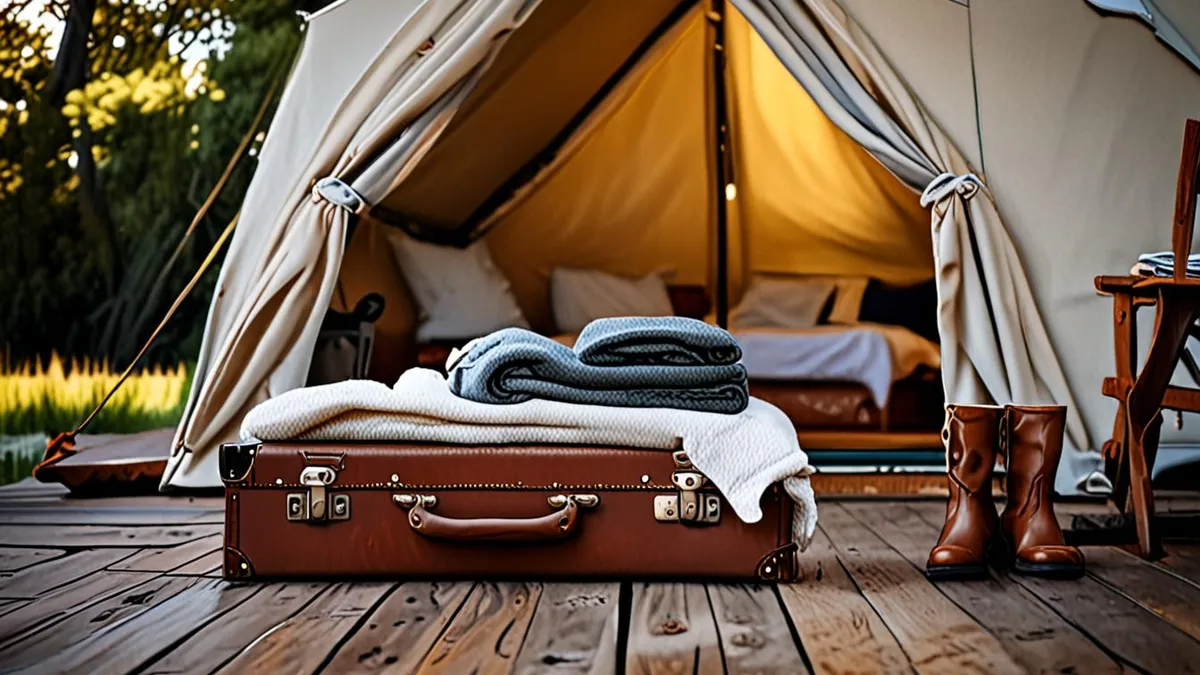
Even at the most comfortable campsites, you will spend real time outdoors. Walking from your tent to the bathroom, the dining lodge or the fire pit usually means gravel paths and dewy grass, especially in the early morning when dew settles overnight. Pack waterproof walking shoes with decent grip so wet ground never slows you down or ruins your mood before breakfast. Canvas tents are wonderfully quiet in the rain, but every meal, shower and evening drink still requires a walk outside, sometimes across open ground with no cover overhead. If rain is forecast, a dry pair of socks waiting back at your tent feels like a small luxury, so consider packing a spare set just for evenings.
Inside the tent, you will want something softer. Sandals or slides protect your feet on wooden floors and are essential if your site has shared shower facilities, where going barefoot is neither comfortable nor hygienic. Two pairs of footwear sounds like a luxury, but both will earn their keep, and neither takes up much room in a duffel bag.
Weather protection worth packing
- Compact rain jacket: Choose one that packs into its own pocket, so it lives in your daypack and is ready when a forecast shifts halfway through your stay.
- Packable umbrella: Useful for steady drizzle on the walk to dinner, when a jacket alone leaves your legs soaked.
- Reef-safe sunscreen: Open meadow locations offer little shade, and a high-SPF, water-friendly formula protects you during long days outside.
- Insect repellent: Grassland and lakeside sites can be lively at dusk, so a small spray or lotion for evenings around the fire makes a noticeable difference.
Slip the sunscreen and repellent into a sealable bag to keep any leaks away from your clothing, and reapply sunscreen after swimming or heavy sweating. A quick check of the sky before you leave the tent each morning, combined with these small items, means the weather stays an inconvenience rather than a trip-ruiner.
Personal Care and Comfort Items
Luxury camping gets you close to nature without giving up comfort, but the bathroom situation is where that comfort often shows its limits. Many glamping bathrooms stock only the basics, if anything at all, so bring the skincare and hair products you actually use. Travel-sized versions of your usual cleanser, moisturizer and conditioner take up little space and save you from settling for a generic bar of soap. If you color-treat your hair or have sensitive skin, this is one area where substitutions rarely go well.
Canvas walls also mean you live on nature’s schedule. Sunrise light floods through tent fabric early, and birdsong starts long before most guests want to be awake. A soft eye mask and a pair of foam earplugs weigh almost nothing and can be the difference between a restful night and waking at dawn every morning of your trip.
Finally, think about the small gear that keeps you comfortable between hikes and evenings at the tent. A few items worth adding to your bag:
- Reusable water bottle — insulated stainless steel models keep water cold through a morning hike and refill easily at camp water stations.
- Small daypack — a lightweight 15-20 liter pack holds your layers, snacks and bottle on trail walks that start right from your tent.
- Power bank — tent outlets are limited and often shared, so a charged 10,000 mAh or larger bank keeps your phone alive for photos and maps.
- Travel adapters — if you are glamping abroad or at a remote site with unusual sockets, a compact universal adapter saves you from borrowing at the front desk.
Food, Drinks and Campsite Extras
Self-catering at a glamping site works well if you plan around limited equipment. Many tents offer only a two-burner stove, a small fridge and a handful of pans, so complicated recipes quickly become frustrating. When you book, which should be 2-3 months ahead for peak season anyway, ask specifically what the kitchen includes: oven or no oven, grill access, cooking oil and spices provided or not. Then build your meals around one-pan dishes like skillet pastas, stir-fries and foil-packet vegetables that need little prep and less washing up.
Mornings deserve their own plan. On-site restaurants at upscale camps often serve breakfast from a set hour, and if you like coffee the moment you wake, you will be waiting. Instant coffee or a small travel press, tea bags and a few snacks bridge the gap. Shelf-stable breakfast items like granola bars or instant oatmeal cups need no refrigeration and handle transport well.
Before you pack any food, check the camp’s rules. Some sites allow you to enjoy drinks at your tent; others restrict alcohol to licensed areas. A bottle of wine or sparkling drink is a lovely end to an evening outdoors, but confirm it is permitted where you are staying. In bear country or other wildlife areas, the rules get stricter:
- Leave glass at home: many wildlife-area campsites ban glass bottles entirely, so switch to cans or a flask.
- Avoid strong-smelling food: cured meats, ripe cheese and open snack bags can attract animals; sealed, low-odor options are safer.
- Use provided storage: sites in bear areas typically offer bear-proof lockers or food storage inside buildings, so plan your packing around using them rather than keeping food in your tent.
- Seal everything nightly: resealable bags and hard-sided containers keep scents contained between meals.
Finally, pack out what you pack in. Remote camps often have limited waste collection, so bring a few trash bags and plan to carry rubbish to whatever disposal point the site designates.
Choosing Where to Go Glamping
The right destination shapes the whole trip, so it pays to compare options before you commit. Lakeside and mountain sites are the most sought-after, and for good reason: morning mist on the water and hiking trails from your doorstep are hard to beat. The trade-off is demand. For the May to October window, the best lakeside and mountain sites fill first, so reserve as early as you can rather than hoping for a late cancellation.
Accommodation type matters more than most first-timers expect. A classic safari-style tent gives you that canvas-and-campfire feel, cabins offer solid walls and better soundproofing, and geodesic domes deliver panoramic views and often skylights for stargazing. Nightly rates typically run from $150 to $600 depending on season and location, and within that range the differences show up in bathroom arrangements, heating and how much of the experience is catered. If you want a sense of how refined the top end can be, a stay like Hoshinoya Fuji Japan with glamping cabins shows what a full-service mountain camp looks like when everything is handled for you.
What to check before booking
Bathroom setup is the single biggest comfort divider. A tent with an en-suite bathroom changes the experience entirely compared with a walk across a dewy field at night, and the price gap between the two is often smaller than people assume. Ask the host for photos of the actual bathroom, not just the bedroom, so you know exactly what you are paying for.
Heating is the second thing to verify if you are traveling in shoulder season, on the edges of May or October. Even well-built canvas tents get cold after dark, and a site with proper heating, hot water on demand and insulated flooring turns a chilly month into a bargain season with fewer crowds. It also helps to ask how far your tent sits from the shared facilities, since a short, lit path makes a big difference on a rainy night. Confirm both before you book, and you will avoid the most common glamping disappointment.
Final Packing Recap
The secret to packing for a luxury camping trip is simpler than most first-timers expect: verify what your camp already provides, then bring only the personal items that make the stay yours. Since most glamping tents supply bedding, towels and basic furniture, you can skip the bulky extras and focus on your own layers, footwear and care items.
Plan for cool nights and sudden rain with a few warm layers, waterproofs and a power bank, and you will be comfortable from sunrise to dinner. Book early for peak season, pack light, and enjoy the rare pleasure of sleeping under canvas without giving up comfort. If this checklist helped you prepare, leave a comment or share it with a friend planning their first glamping trip.