You’ve found a glamping site you love, and then comes the hard part: should you book the safari tent, the yurt or the dome? The safari tent vs yurt vs dome question trips up a lot of travelers, because all three promise a comfy night under canvas, yet they behave very differently once you factor in your destination, the season and how much space you actually need. Pick the wrong one and a dreamy escape can turn into a sweaty, cramped or chilly disappointment.
This guide breaks down the decision step by step. We’ll compare the core differences, comfort and space, and how each structure handles weather, from domes that shine in shoulder seasons to yurts that cope with sub-zero winters. You’ll also find typical price ranges, the destinations where each stay type works best, and practical booking advice, including how far ahead to reserve for peak season. By the end, you’ll know exactly which one fits your trip.
Safari Tent vs Yurt vs Dome: The Core Differences
At first glance, all three options look like “fancy camping,” but the structures themselves are fundamentally different, and that shapes everything about your stay. A safari tent is a rectangular canvas lodge stretched over a fixed frame, typically running 40-60 square meters. That size, combined with straight walls and a rigid layout, is why operators can furnish them like a small apartment rather than a tent.
Yurts take a completely different approach. These circular structures use a lattice wall covered in fabric or felt, usually spanning 20-35 square meters, with a central dome skylight overhead. The design has deep roots in Central Asian nomadic traditions, where the round shape proved practical for warmth and portability long before anyone called it glamping.
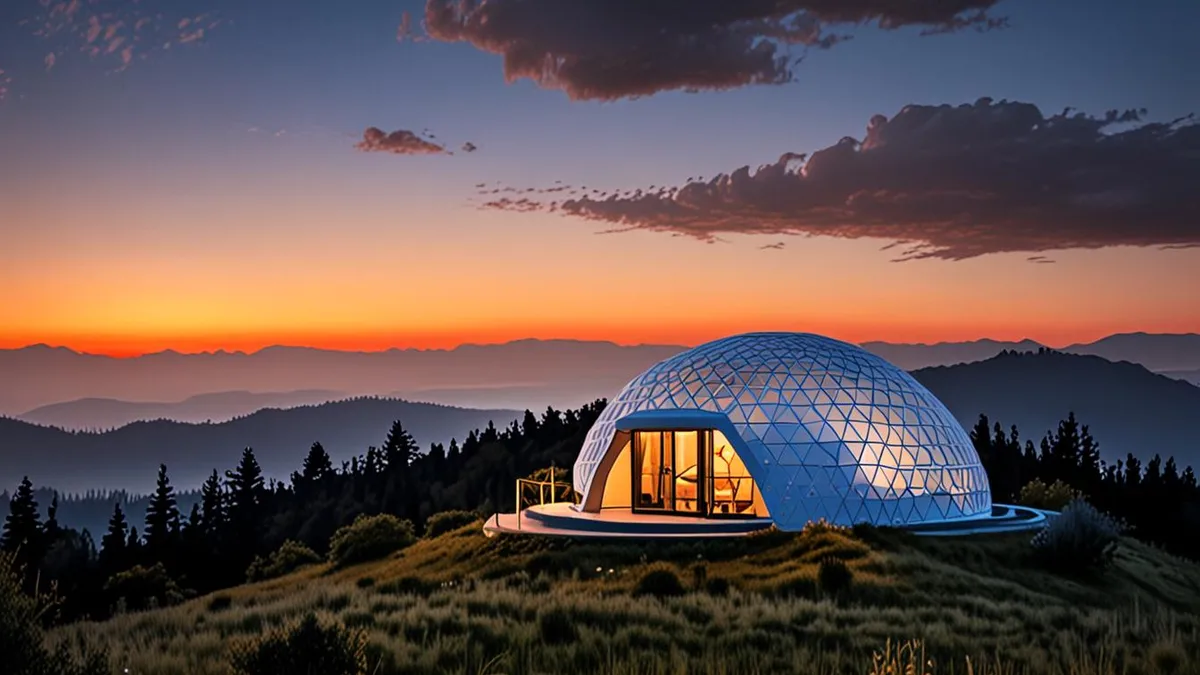
Domes are the newcomers: geodesic spheres built from triangular panels, generally 20-40 square meters. Because the triangles distribute weight evenly, large sections can be made of clear or translucent panels, which is why domes are famous for sky and landscape views from the bed.
Why Structure Shapes the Experience
The geometry you sleep in changes the feel of the trip. A safari tent gives you straight walls, a proper veranda and room to arrange furniture the way a hotel room would. A yurt wraps you in a round, cozy interior where everything sits within a few steps of the center. A dome curves around you, with panoramic windows pulling the outside world in from nearly every angle.
None of these is better across the board — each structure simply delivers a different kind of experience, and knowing which one appeals to you is the first step in choosing well.
Comfort and Space Compared
Comfort is where these three structures really separate. A safari tent behaves like a small lodge: the rectangular floor plan of 40-60 square meters usually holds a proper bed zone, a lounge with a sofa or armchairs, and often an en-suite bathroom with a real flush toilet and hot shower. Step out the back and you typically find a covered front deck with chairs, which effectively doubles your living space when the weather is kind.
Yurts take a different approach. The circular layout of 20-35 square meters feels compact but surprisingly efficient, with beds arranged around the central crown beneath the skylight. The trade-off is storage: there are few straight walls, so luggage often lives in low trunks or under the bed, and two adults plus gear can start to feel snug after more than a couple of nights.
Domes are all about what you see, not how much you can spread out. Across 20-40 square meters, the curved walls mean furniture gets pushed toward the center, and usable corners are scarce, so a wardrobe or desk may simply not exist. What you gain is a view-to-floor-area ratio no other structure can match, especially at night when the panoramic panels turn the ceiling into a stargazing screen. Some upscale dome properties take this further, as in the case of glamping cabins with views of Mount Fuji at Hoshinoya Fuji in Japan, where the design puts the scenery front and center.
So the decision comes down to what “comfort” means to you. If you want the closest thing to a hotel room under canvas, the safari tent is hard to beat. If waking up to a wall of scenery matters more than unpacking space, a dome wins. Here are a few specifics to check before you commit:
- Bedroom separation: many safari tents partition the sleeping area behind a canvas wall or curtain, which helps if one of you reads late while the other sleeps.
- Bathroom setup: en-suite bathrooms are common in safari tents, but in some yurts and smaller domes the shower and toilet may be shared in a separate washroom block a short walk away.
- Window coverings: transparent dome panels often come with blinds or shades, but ask whether they are automated or manual if privacy at dusk matters to you.
- Furniture count: yurts and domes typically offer a bed, a small table and maybe two chairs, so don’t expect a dresser, desk or hanging closet in the smaller floor plans.
Climate and Season: Which Structure Handles Weather Best
Weather is where these three structures really separate. A yurt’s insulated circular walls and felt or canvas coverings hold heat remarkably well, and a properly equipped yurt stays usable in sub-zero winter conditions. If your trip is a cold-season escape—snow on the ground, a wood stove crackling—the yurt is usually the safest pick.
Domes earn their reputation in the shoulder seasons. Their triangular panels shed snow and wind efficiently, so a March-April or September-October stay tends to be comfortable rather than a gamble. Add clear panels overhead and you get the northern lights or autumn stars without leaving your bed.
Canvas and rain: the safari tent’s weak spot
Safari tents are built for dry, warm months. Canvas handles heat and light showers fine, but in heavy or sustained monsoon-style rain it can leak, and humidity makes everything feel damp. If you’re traveling to a region with a defined wet season, ask the operator how the tents cope before you commit.
It also helps to know the calendar: peak glamping season in most temperate regions runs May to October, when safari tents are at their best. Match your structure to your travel window—yurt for deep winter, dome for the edges of the season, safari tent for the warm, dry core.
Price Ranges and What You Get for the Money
Glamping prices vary more by structure than many travelers expect, and knowing the typical ranges helps you spot a fair deal. Safari tents typically cost USD 150-400 per night, which reflects their size and full furnishings. Yurts are the budget option at roughly USD 100-250 per night, while domes command a premium of USD 180-500 per night, driven largely by their panoramic design.
These are typical ranges, not fixed rules. Location, season and operator all push prices up or down, so always check current rates before booking. What matters more is understanding what the money actually buys you at each level.
As a rough guide, higher rates usually buy three things: en-suite bathrooms, heating or cooling, and private outdoor space. A USD 300 safari tent with a proper bathroom and deck feels very different from a USD 150 unit with a shared washblock a short walk away. The same logic applies to domes and yurts, where the cheapest options often skip climate control entirely.
- Entry-level yurts usually mean a wood stove or basic heater at best, shared bathroom facilities, and bedding provided but little else — fine for a one- or two-night stay in good weather.
- Mid-range safari tents typically include a proper bed frame rather than a mattress on the floor, a covered veranda with seating, and solar or mains lighting inside.
- Top-tier domes often add features you cannot retrofit easily, such as insulated panel layers, underfloor heating and large transparent sections positioned toward the best view or the night sky.
- Shoulder-season pricing can bring dome rates down toward the lower end of their range, so the same unit that costs a premium in peak summer may be noticeably cheaper in quieter months.
Where Each Stay Type Works Best
Each of the three structures has a landscape where it genuinely belongs, and choosing the right pairing matters more than picking the trendiest option. Match the structure to the terrain rather than forcing a style onto the wrong setting.
Safari tents and open country
Safari tents suit savanna, grassland and lakeside settings, where their wide front deck adds real value. These are the stays built for sitting outside with a coffee while watching wildlife on the plain or the water in front of you. The rectangular layout and veranda make sense in wide-open terrain, where the tent itself is part of the view rather than the whole point.
Yurts and domes in their element
Yurts fit mountain, steppe and cold-climate sites across Central Asia, Mongolia and alpine regions. Their circular shape and insulated walls were developed for exactly these conditions, so they feel at home where the wind blows and the nights turn cold. A yurt on a windswept steppe feels authentic; the same yurt on a humid tropical coast often feels like a mismatch.
Domes excel on hillsides, coastlines and dark-sky locations, where the transparent panels become the attraction rather than a design detail. On a hillside, the curved panoramic windows frame the valley below; in a dark-sky area, the clear sections turn the ceiling into a stargazing feature. If the surrounding landscape is the main reason you booked, a dome usually delivers it better than any other structure.
Before booking, look at photos of the actual site, not just the tent. A well-placed yurt on a mountainside beats a poorly placed dome anywhere.
How to Book: Timing and Availability
Glamping sites are small by nature — many have fewer than a dozen units — so availability disappears much faster than at large hotels. A popular site with eight or ten accommodations simply cannot absorb last-minute demand the way a 200-room resort can. Booking at the right time is often the difference between getting the best unit on site and settling for whatever is left over. The steps below cover how to plan your reservation and what to confirm before you pay.
- Book 3-6 months ahead for summer weekend stays. Peak season in most temperate regions runs May to October, and weekends in that window fill first. Three to six months of lead time gives you a realistic choice of units and dates, rather than a single leftover option on an inconvenient weekend.
- Reserve 6-12 months in advance for holiday periods. Around major holidays, the best units — the largest safari tents, the domes with the finest views — sell out first, sometimes almost a year ahead. If you have fixed dates and a specific structure in mind, commit early and treat it like booking a flight.
- Target shoulder-season domes in March-April and September-October. These months are easier to secure and often come at lower rates, and they are exactly when domes perform best weather-wise. You trade peak-season buzz for quieter grounds and clearer availability.
- Ask specific questions before confirming a cold-season booking. For a winter yurt or dome, check the heating setup, the insulation level and whether the bathroom is en-suite or in a separate building. Yurts are designed to stay usable in sub-zero winter conditions, but a shared washblock walk at minus temperatures changes the experience considerably.
Finally, confirm cancellation terms before paying any deposit. Small operators often run stricter policies than hotels, sometimes requiring full payment upfront or offering limited refund windows. Plans change, and a rigid policy can turn a small adjustment into a lost booking. A short email asking about heating, bathroom arrangements and refund rules costs nothing and prevents most disappointments. It also gives you a sense of how responsive the operator is before you arrive — a useful signal in itself.
Choosing Your Glamping Stay
So which one should you book? Safari tents win on space and comfort, yurts on value and winter use, and domes on views and shoulder-season appeal. If you weigh the price ranges and booking lead times above against your travel dates, a clear answer usually appears.
In the end, three factors decide the right structure: your budget, your season and your landscape. Whichever you pick, matching the structure to the destination is what makes a glamping trip memorable. If this helped you choose, leave a comment or share the article with a fellow traveler.