Planning your first safari should be thrilling, but most travelers hit the same wall: hundreds of lodges across a dozen famous parks, nightly rates that range from the price of a motel to that of a boutique hotel, and no clear idea of where to even begin. If you try to choose a safari lodge by scrolling through photo galleries, you’ll end up comparing rooms instead of experiences.
This guide works in the opposite direction. We start with the park itself, then cover when to travel and how far ahead to book, what a realistic nightly budget looks like at each tier, and whether a lodge, tented camp or private villa suits you best. From there we get into location details that quietly make or break a safari, the red flags to check before you pay a deposit, and a simple way to pull the whole decision together. By the end, you’ll have a shortlist you can actually trust.
How to Choose a Safari Lodge: Start With the Park, Not the Property
The biggest mistake first-timers make is falling in love with a lodge photo before deciding where that lodge actually sits. Your ecosystem determines what you’ll see out the window every morning, and no amount of luxury inside the room changes that. Start with the wildlife you care about most, then let the park choose the lodge for you.
Match the ecosystem to your priorities
If big cats and the great migration are your dream, the Serengeti and Masai Mara are the obvious anchors, with wide open plains that make predators easy to spot. Kruger National Park in South Africa offers excellent value, especially if you like the freedom of self-drive game viewing. The Okavango Delta plays a different game entirely, with water-based safaris by mokoro or boat that reveal a side of Africa you can’t get on land.
Think one level deeper too. Open plains favor predator sightings, while riverine areas tend to concentrate elephants and other animals that rely on water. Private reserves bordering the famous parks often permit night drives and activities that public parks restrict, which matters if you want to see nocturnal hunters.
Don’t ignore accessibility
Finally, check how you’ll actually get there. Fly-in camps use small bush planes that land you minutes from camp, while road transfers from the nearest airport can swallow hours of your day. On a 3-4 night stay, that difference is enormous.
Timing Your Stay: Seasons and How Far Ahead to Book
Two travelers can book the same lodge and have completely different trips depending on when they go. Season shapes everything: what you see, how much you pay and how many other vehicles share each sighting. Get this right before you fixate on any single property.
Dry season versus green season
The June-October dry season is peak game viewing for good reason. Vegetation thins out, animals gather predictably at rivers and waterholes, and sightings come easier. The trade-off is demand: rates peak from July to September, and popular camps fill up fast.
The November-March green season flips the equation. Rates drop by roughly 30-40%, the bush turns lush and green, newborn animals appear everywhere, and you’ll share sightings with far fewer vehicles. Photography in the soft light after rains can be superb. You may work harder for sightings in thicker vegetation, but many travelers find the trade worth it.
How far ahead to book
If you’re set on July-September dates, especially around the migration crossings between the Serengeti and Masai Mara, reserve 9-12 months ahead. The small camps along the crossing routes have limited rooms and they go first.
Whatever the season, plan a minimum of 3-4 nights. Two nights is the absolute floor. Splitting your stay between two camps, perhaps one on open plains and one in a riverine or water-based area, adds variety and doubles your chances of a memorable sighting.
Setting a Realistic Budget Per Night
Safari pricing confuses newcomers because the nightly rate covers wildly different things at different camps. A $200 tent and a $1,200 suite are not the same product at different prices; they’re different experiences entirely. Understanding the three main tiers helps you spend where it matters most to you, whether that’s guiding quality, food, or exclusivity.
Budget camps typically run $100-250 per person per night. Expect basic rooms or tents, shared game-drive vehicles and group-style meals. Mid-range lodges at $250-600 per person per night usually include full board and twice-daily game drives, which is the sweet spot for most first-timers. Luxury lodges at $800-1,500+ add private guides, fine dining and access to exclusive concession areas where you’ll rarely see another vehicle. The jump between tiers is steep, so decide early which comforts you genuinely value.
Whichever tier you choose, confirm exactly what’s included before booking. Park fees, drinks, transfers and laundry can swing the true cost by 20-30%, turning an affordable-looking rate into an expensive one. Ask the lodge for a written breakdown of what the nightly rate covers, then compare quotes on like-for-like terms rather than headline prices.
- Park and conservation fees: some lodges add these on top of the nightly rate, and they change regularly, so ask for the current amount for your travel dates.
- Drinks policy: some all-inclusive camps cover everything including bar drinks and house wine, while others charge separately, which adds up over a multi-night stay.
- Airstrip transfers: fly-in camps sometimes quote these separately, so check whether the rate includes the pickup from the bush plane.
- Laundry and gratuities: many camps offer laundry as a courtesy at mid-range and above, but it’s worth confirming, and tipping guidelines vary by country and camp.
- Single supplements and child rates: solo travelers and families can face significant surcharges, so ask before comparing rates across lodges.
Tented Camp, Lodge or Private Villa: Picking Your Stay Type
One of the biggest decisions you’ll make after picking a park is what kind of roof (or canvas) you’ll sleep under. The good news is that “safari accommodation” covers a wide spectrum, and none of the options require you to rough it unless you want to. The trick is matching the stay type to your comfort expectations and travel style.
For most first-time visitors, a permanent lodge is the safest bet. You get solid walls, a proper pool to cool off in during the midday heat, and amenities like reliable power and Wi-Fi that make the adjustment easier. If you want a bit more atmosphere without giving up comfort, luxury tented camps are the sweet spot: you fall asleep to sounds of the bush, but you still have an en-suite bathroom and often an outdoor shower.
Before you book, it helps to understand the four main categories and what sets each apart:
- Permanent lodges often sit on the same footprint year-round, which means established gardens, dining areas and sometimes spa or fitness facilities — ideal if you’re combining a safari with a honeymoon or a longer multi-stop trip.
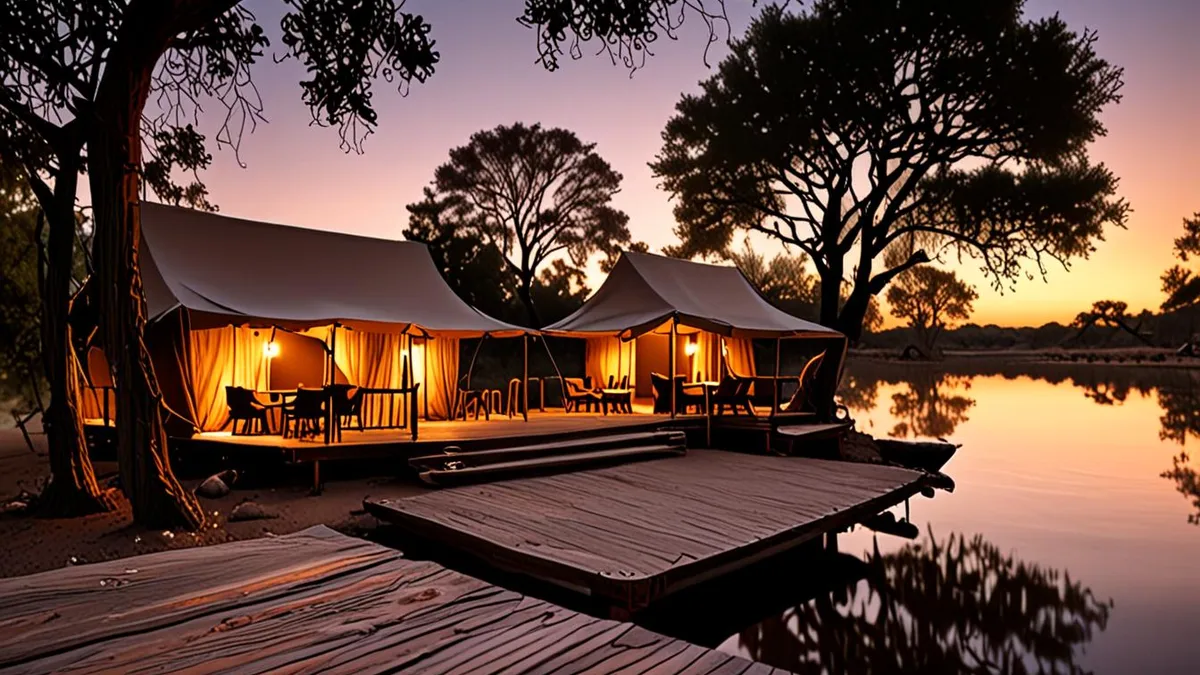
- Luxury tented camps typically raise their canvas tents on wooden platforms, so you get real beds, hot water and shaded decks while still feeling surrounded by the bush rather than a building.
- Mobile tented camps relocate seasonally to follow the migration, so your tent may be packed up and moved between your stay dates — the experience feels closest to a classic expedition safari, with simple but comfortable furnishings.
- Private villas or sole-use camps come with your own guide and dedicated vehicle, letting a family or group set its own schedule, linger at a sighting as long as you like and tailor meals to kids or dietary needs.
A practical tip: if you’re torn, split your stay. Many travelers combine a lodge with a tented camp to sample both styles in one trip.
Location Details That Make or Break the Experience
Where your lodge sits matters as much as what it offers. A beautiful property an hour from the wildlife can quietly steal game-viewing time from every day of your trip, so dig into the location details before you commit.
Your first priority should be lodges inside the reserve or right on its border. Staying inside means you’re positioned for dawn drives the moment animals are most active, while day visitors from outside are still lining up at the gate. Every morning you get that early head start, the extra minutes compound into hours of additional game viewing across your stay.
Concessions: what the rules allow
Next, look at whether the lodge operates in a private concession. These areas typically permit off-road driving to follow a predator, night drives to spot nocturnal animals, and guided walking safaris — activities that public parks usually restrict. If those experiences are on your wishlist, a concession-based camp is worth the often higher price.
Transfers and in-camp viewing
Finally, ask two practical questions. How far is the camp from the airstrip? A short transfer is a pleasant end to a travel day; a long, bumpy road transfer after a flight is not. If fly-in access matters to you, confirm the airstrip distance and road conditions directly with the camp before booking.
And does the camp itself have game at its doorstep? A watering-hole or riverfront setting means you can watch elephants and antelope from the deck between drives, effectively adding game viewing hours at no extra cost. Some lodges also hide blinds or sunken hides near active water points, which are ideal for photography during the midday lull when drives have paused.
One last tip: check the camp’s position relative to the park gate and any seasonal closures. A lodge that looks close on a map can sit on the wrong side of a river crossing or a gated road, adding significant drive time. Ask the reservations team to walk you through the actual route and transfer method so there are no surprises on arrival.
Red Flags and Questions to Ask Before You Commit
Photos can make any camp look perfect, so the real test is what you learn from direct questions and recent guest feedback. A few pointed inquiries before you pay a deposit will tell you more than a glossy gallery ever will.
Start with the game-drive experience itself, since that’s where you’ll spend most of your time. Ask how many vehicles are allowed at a sighting — if the answer is more than three, expect to share leopard viewings with a line of other cars. Then ask about staffing: how many guests per guide and vehicle, and whether drives are shared with other bookings or private to your party.
Logistics matter too. If you’re traveling with children, confirm the minimum age policy, since some camps refuse younger kids or require private arrangements. Ask whether the camp sits in a malaria zone and what precautions it recommends, and check whether it closes entirely during the rainy months — some seasonal camps shut down and your dates may not actually be available.
Beyond the basics, here are specific questions experienced safari-goers always ask:
- What is the typical vehicle setup — rows of seats with a pop-up roof, or open-sided 4x4s with individual seats and good photography angles?
- How long have the head guide and senior trackers been with the camp? Long-serving staff usually signal consistently good sightings and knowledge.
- What happens on a no-sighting day — are there bush walks, village visits or hide-based viewing to fill the schedule?
- Do recent reviews mention food quality and flexibility around dietary needs, rather than just room aesthetics?
Read reviews from the last few months specifically, and weight complaints about guiding and food more heavily than one-off grumbles about weather or Wi-Fi.
Wrapping Up Your Safari Lodge Decision
If you started this guide feeling overwhelmed by lodge options, price tiers and park names, the way forward is simpler than it looks: choose your park first, then match the season, budget and stay type to it. When those four decisions work together, almost any well-reviewed lodge in that park will give you a great first safari. When they don’t, even a beautiful property can leave you disappointed.
Remember the timing rules that matter most. Booking 9-12 months ahead secures peak-season dates in the top parks, while the green season trades crowds for savings of roughly 30-40%. And don’t overcomplicate the length of stay: 3-4 nights at the right location delivers the classic first-safari experience. If this guide helped you sort out your plans, leave a comment or share it with a fellow traveler.